
Crayon Portraits
Many families have Crayon Portraits of their ancestors or remember seeing them in their grandparent’s home growing up. These early photographic portraits on paper are embellished with pastel, charcoal “crayons” or pigments to produce a hand drawn, life-like affect. The paper portrait is molded atop a convex board and framed in an oval frame with convex glass.
This portrait arrived at Carrabba Conservation with much damage to the image area including scratches and dirt adhered to the surface. Due to the way these convex portraits are molded and stretched over time, the paper expands and contracts, and then can easily become brittle and cracked. A break with a separate piece on the lower edge was held together on the back with masking tape, affecting the stability of the portrait and the image area.
Preservation Process
The surface was cleaned and removed of debris. After removing tapes and reattaching the loose piece using wheat starch paste and archival tissue, the portrait was inpainted with colored pencils to cosmetically complete the image area. Wood off-gasses and causes acidic burn when directly in contact with paper, a Mylar barrier was placed inside the frame to protect the portrait from the wood before it was returned to the frame.
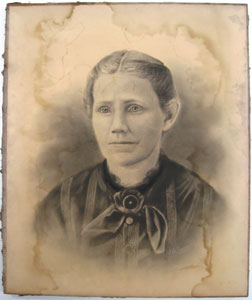
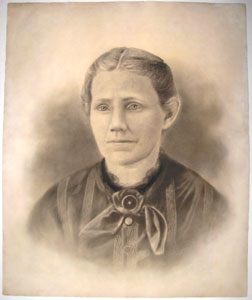 These crayon portraits on paper were backed with linen stretched around a wooden stretcher frame. Over time the materials which are highly acidic become hazardous; deteriorating linen, wood based supports, wooden stretcher, made worse by being pressed directly against the glass. Upon arrival in the lab the portraits were water stained, with surface damage and tears at edges. The female portrait was mold damaged.
The portraits were released from their stretchers and mechanically separated from the linen backing. Because of the water staining and due to the fragility of the media, the portraits were “blotter washed”. Moisture was slowly introduced to the paper and portraits were laid on a series of wet blotters to draw out the stains. The pieces were chemically treated and stabilized. Wheat starch paste and tissue was used to mend tears, and then portraits were inpainted to cosmetically improve image area. The original frames once cleaned, were repaired, touched up, and a layer of barrier placed on the interior sealed to protect from off gassing wood, framing materials were upgraded including mats, glazing and backing materials and works were refit.